In the realm of modern property management, automatic gate systems have transitioned from a luxury to a standard feature for both residential and commercial security. Among the various solutions available on the market, the CSPY-S12 series sliding gate opener represent a robust and versatile option. Designed to handle gates weighing from 300 kilograms up to an impressive 2000 kilograms, this system is engineered for durability and performance under extreme conditions. However, the sophistication of such machinery necessitates a thorough understanding of its installation, safety protocols, and maintenance requirements.
This article serves as a comprehensive guide based on the official CSPY-S12 User Manual. By exploring the product's specifications, safety warnings, mechanical installation and operational features, we aim to provide a clear roadmap for professional installers and end-users alike, ensuring the system operates safely and efficiently for years to come.
Before any physical installation begins, it is crucial to select the correct model for the specific gate. The CSPY-S12 series offers a range of models differentiated primarily by their ITEM NO., which correlates directly to their output torque and maximum gate weight capacity.
The technical data table in the manual provides a clear comparison:
Power Supply: All models are versatile, operating on either AC230V or AC120V, with the 382000 model also supporting AC380V for heavier industrial applications.
Motor Speed: All units maintain a consistent motor speed of 1400 RPM, driving the gate at a steady 12 meters per minute. This standardization ensures predictable movement regardless of the gate weight.
Torque and Capacity: This is the defining characteristic of the series. The range begins with the 300 model, offering 7Nm of torque suitable for lightweight residential gates up to 300KG. It scales up to the heavy-duty 382000 model, which delivers 45Nm of torque, powerful enough to move a 2-ton gate with ease.
Environmental Durability: One of the most notable features is the operating temperature range. Certified to function between -45°C and +65°C, the CSPY-S12 is built to withstand harsh climates, from freezing winters to scorching summers. The protection class is rated at IP44 for most models (IP41 for the 1500 model), indicating the unit is protected against solid objects larger than 1mm and splashing water from all directions.
Noise Pollution: With a noise level of ≤56dB, the operator runs quietly, a significant advantage for residential areas where noise disturbance is a concern.
Understanding these parameters ensures that the installer matches the operator's power to the gate's physical demands, preventing premature wear or mechanical failure.
The opening section of the manual is dedicated to warnings, underscoring the principle that safety is paramount. Automatic machinery involves moving parts and electrical current and the manual leaves no room for ambiguity regarding the risks.
Personnel Qualifications:
The document explicitly states that "This product must be installed correctly by qualified, expert personnel (professional installer)." This is not a DIY project for amateurs. Incorrect installation can lead to serious injury or property damage, for which the manufacturer cannot be held liable.
Operational Safety:
Maintenance and Liability:
The manufacturer's disclaimer is clear: "The Firm shall not be answerable for damage caused by failure to comply with the manual." This places the onus of responsibility squarely on the installer and user to adhere strictly to the provided guidelines.
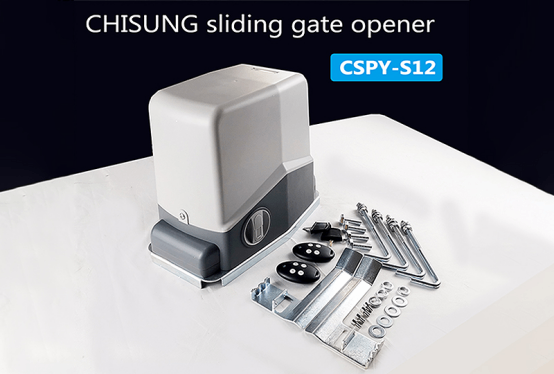
The installation section of the manual is where theory meets practice. It outlines the physical mounting of the operator, the rack, and the limit switches.
A. Installing the Steel Basement (Foundation)
The process begins with the foundation. The gate operator is mounted onto threaded bolts embedded in a concrete basement. A critical note is highlighted: "the aluminum base of gate operator can NOT be in the concrete!!!" (See Fig.1). This is to prevent corrosion (galvanic reaction between aluminum and concrete) and to allow for micro-adjustments. The gate's weight must be borne by its own wheels and track, not by the operator's cogwheel, ensuring the motor isn't forced to support the gate's mass.
B. Mounting the Gear Rack
The gear rack is the toothed bar that translates the motor's rotation into linear gate movement. The manual provides a clever, practical tip for installation: disengage the operator (using the manual release) and place the rack on the cog. By pushing the gate, the rack moves with it, allowing the installer to mark the exact fixing points on the gate. This ensures a perfect, linear alignment. The manual specifies a critical tolerance: "There is a gap no less than 0.2mm between the cog wheel and the gear rack bar." Too tight, and the system binds; too loose, and the gears will skip and wear prematurely.
C. The Release Mechanism (Manual Operation)
In a power cut, the gate becomes a barrier. The CSPY-S12 features a lockable release mechanism (Fig.3). Turning the knob clockwise disengages the clutch, allowing the gate to be pushed manually. Turning it anti-clockwise re-engages the motor for automatic operation. The manual also includes a troubleshooting tip: if the limit switch fails and the gate is blocked, and the knob release doesn't work, the installer may need to unscrew the four screws fixing the operator to the base to free the gate.
D. Fitting Limit Switches
Limit switches tell the motor when to stop. The manual describes two types:
Spring Limited Switch: Mechanical localizers are mounted on the gear rack. As the gate travels, the spring arm contacts the incline of the localizer, triggering the stop.
Magnetic Limit Switch: Magnets and sensors are used. The diagram (Fig.4) emphasizes precise alignment: the magnet must point towards the motor, and the contact must be in the middle for reliable detection.
E. Cables Connection
The wiring is color-coded for simplicity:
Motor: Blue (Common), Black/Brown (Open/Close).
Mechanical Limit Switch: Blue (Common), Black/White (Open/Close).
Magnetic Limit Switch: Red (+12V), Black (GND), Green/White (Open/Close).
The manual wisely directs users to a separate document for the circuit board settings, keeping the mechanical instructions focused and uncluttered.
The CSPY-S12 Sliding Gate Opener is a testament to robust engineering, designed to provide secure and reliable automated access in the world's most challenging environments. However, its effectiveness is entirely dependent on the quality of its installation and the diligence of its maintenance.
From the precise 0.2mm gear rack gap to the critical safety warnings about keeping children away from moving parts, every detail in the manual is designed to ensure a long, safe, and trouble-free operational life. By following these instructions—from selecting the correct torque model to ensuring the aluminum base never touches concrete—professional installers can guarantee a system that not only meets but exceeds user expectations for security and convenience. Ultimately, the CSPY-S12 is more than just a motor; it is an integrated system where mechanical power, electrical control, and human safety must work in perfect harmony.
 Hot News
2026-03-11
Copyright © 2026 Chisung Intelligence Technology (Shenzhen) Co., Limited All rights reserved. - Privacy policy
 EN
EN